The Great Content Paradox of 2026
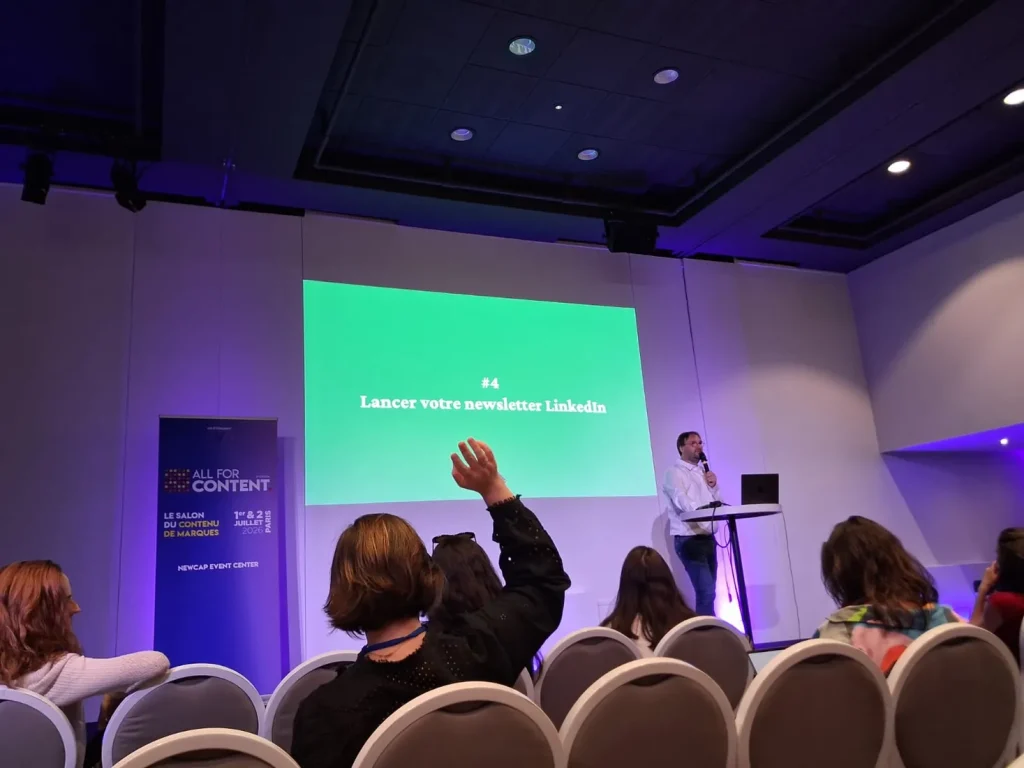
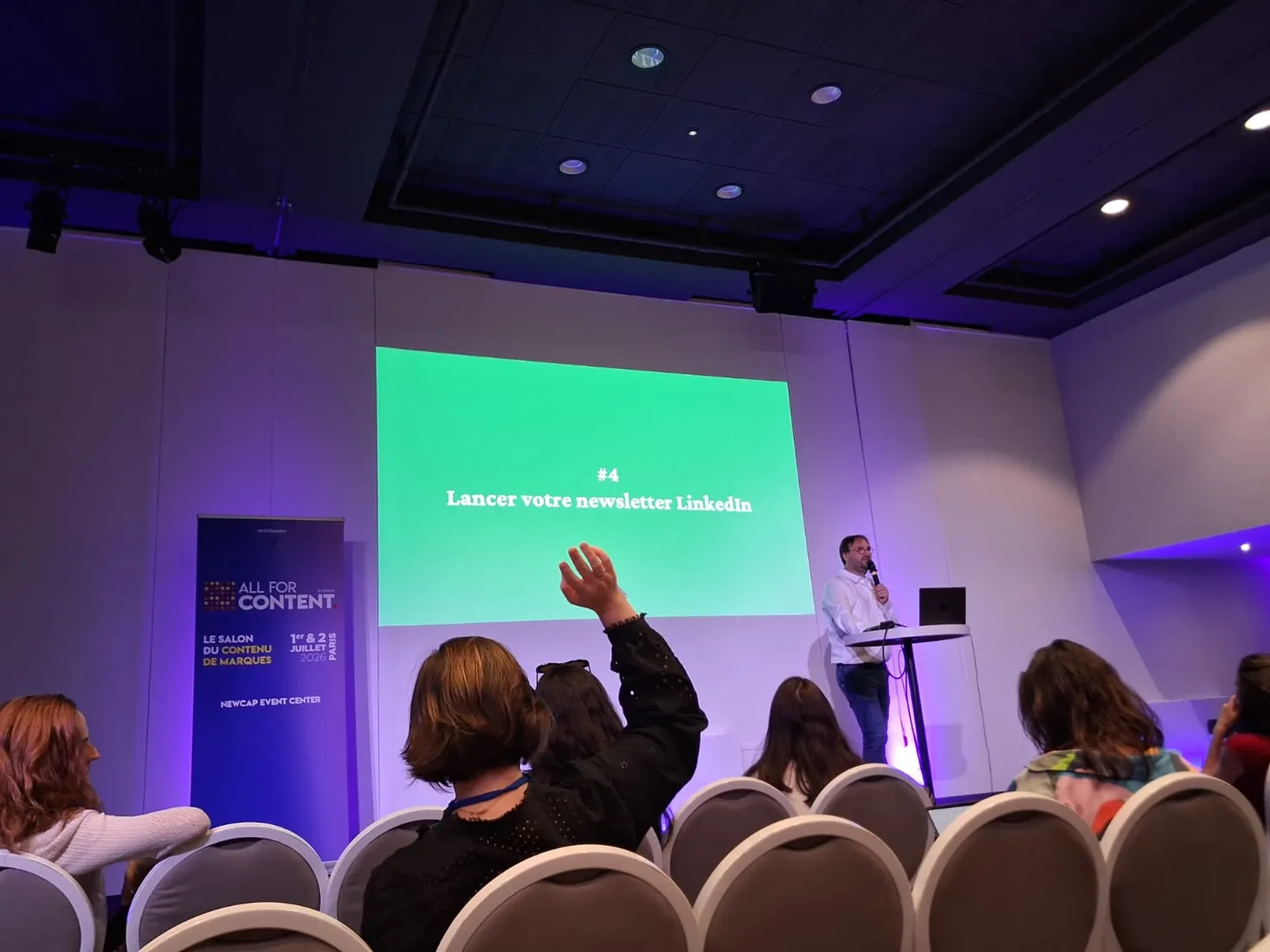
We were at All for Content 2026, the big event in France for content marketing and all the subfields in and around it (SEO, GEO, social, branding).
And let’s just say, I’ve never left an event feeling quite like this.
I’ve been in content for more than 10 years, and I’ve seen it change plenty in that time. But this is the first time since the arrival of generative AI that I’ve come up against such a paradox:
- More than 50% of digital content is now generated by AI, while the quality of online information is nose-diving. This is making “expert” content, the stuff written by identifiable specialists, more sought-after (by humans and AI) and essential to brand visibility than ever
- And yet … there have never been so many claims that content can now be created by anyone in a few clicks, translated in seconds, adapted to limitless formats and published everywhere instantly, on your website, in a newsletter, on YouTube, LinkedIn, TikTok, Instagram, Reddit – you name it
But this is misleading. No, worse, it creates an illusion that high-performing content is easy to create.
Let’s knock this one on the head: it has been, and will always be, difficult to create relevant, tailored, high-converting content that is optimised for users, search and AI. Because relevance, originality, creativity, and reasoning are complex skills. They are what set us apart as humans, and they can only be acquired through training, practice, knowledge, curiosity, mistakes, improvements, success – basically, lots of sweat, blood and tears. Ever seen an AI agent break a sweat or shed a tear? No, me neither.
However, there is one thing that generative AI does do, and that’s speed up omnichannel content. Let’s talk about content factories.
Definition time – what’s a “content factory”?
A content factory is NOT a magic wand. It can’t pump out good content unsupervised. A content factory is an architecture. It’s a system that’s very, very, very good at content automation. You can use it to:
- Repackage your “master content” for different channels and formats. In other words, you can use your content factory to transform a white paper, brand manifesto or blog post into multiple other formats for simultaneous publication wherever you need it, whether that’s as a leader advocacy piece on LinkedIn, a short-form video on YouTube, a Facebook post or a Reddit thread
- Adapt and optimise content for the conventions of text, visuals, videos and other formats so that they perform across every channel and platform
- Plan the publication of your content using a multichannel editorial content planner that incorporates best practices for each channel, such as when to publish, how to share, how to follow up, etc.
- Track the performance of your content using automated reporting across channels
In other words, a content factory isn’t supposed to create the master content on which you base your campaign. But it can boost a campaign based on authoritative master content.
Publish everywhere
Nowadays, brand visibility boils down to authority, and authority boils down to expertise and how you communicate it.
Whether we’re talking about ChatGPT, Claude, Gemini and Perplexity or good-old Google and Bing, all search engines increasingly value one thing – expertise. Especially if you can attribute that expertise to an identifiable specialist. Because when it comes down to it, what these platforms are trying to do is serve up relevance for their users, and nothing is more relevant than an expert opinion.
This is why in 2026 we no longer talk about:
- Search
- Engine
- Optimisation
But:
- Search
- Everywhere
- Optimisation
If you want to be seen and heard in Google and conversational search engines, your expertise needs to be popping up everywhere across the web. Your white paper needs to be a blog post, and social media posts, and a newsletter, and a Reddit comment, and so on, and on, and on.
Sound exhausting? It needn’t be, if you use a carefully designed content factory.
What’s the risk of a bad content factory?
=> Brand dilution
There are 3 mistakes you want to avoid when you design a content factory. These can happen no matter how you build it or what tools you use. They are:
- Skipping the strategy phase: when you design the architecture of your content factory, you need to define your goals, who you’ll be talking to, what types of content you want to make, how you’ll integrate existing team processes into this new content factory, what each market is looking for, the tools and technology you’ll be running your content factory on, the ethics of your content factory, how you plan to protect intellectual property, etc.
- Forgetting to make “master content”: a content factory can’t run on AI-generated slop. It needs a steady diet of fresh, verified data and unique human expertise to churn out useful content. Otherwise, you’ll end up just being another fool spamming the web with generic content that has no chance of ranking
- Pressing “PUBLISH” without quality control: you can design automated content to be as relevant and complete as possible. But the end result may still not be all you were hoping for. So never skip quality control – especially if you’re adapting your content into multiple languages. I am a translator by training and there is absolutely no doubt in my mind that the vast majority of content translated by AI needs careful checking by a human expert
Fail to respect these guardrails, and you run the risk of mass-producing mediocre content that dilutes your brand identity, authority and key messages.
Trust me: brand dilution is not what you want. It will stop you from ranking in search engines, being cited by LLMs and being noticed by your audience. And if your brand becomes diluted, it’s a long road back to brand authority.
Industrialise your content strategy the right way
Keep in mind 3 things:
- Design the architecture of your content factory around an actual marketing and IT strategy
- Create master content that aligns with an actual editorial content strategy and real business goals
- Be uncompromising about quality before and after content production, and always make sure your content is checked by native experts before it goes out
Do this, and you’re well on your way to making a big splash in your sector.